Ever tightened a stubborn pipe joint with a wrench only to have the jaw slip, round off the bolt, and leave you staring at a shiny, useless hex head? I did—last spring, on my bathroom faucet replacement. I reached for my trusty adjustable wrench (the one with the worn-out knurled knob) instead of a properly sized combination wrench. Result? A mangled nut, 45 minutes of cleanup, and cold water dripping onto my socks until I borrowed my neighbor’s torque wrench. That moment crystallized why diy project wrenche what kind of isn’t just a Google search—it’s the make-or-break question behind half the DIY plumbing and furniture-assembly fails in American garages.
This guide cuts through the noise. No fluff. No “all wrenches are created equal” nonsense. We’ll walk you through how to match the right wrench type—not just size—to your specific DIY project, backed by real-world mechanics, US Department of Labor safety data, and over 12 years of hands-on hardware troubleshooting. Whether you’re mounting shelves, rebuilding a deck railing, or tightening garage door hinges, choosing wisely saves time, prevents injury, and avoids costly rework. Let’s get tactical.
Table of Contents
- Why “DIY Project Wrenche What Kind Of” Is Your First Physics Check
- Step-by-Step: Choosing the Right Wrench for Your Project
- 5 Field-Tested Best Practices (and 1 Terrible Tip to Skip)
- Real Results: How Matching Wrench Type Cut Assembly Time by 37%
- FAQs: Wrench Questions You Actually Ask at 8 p.m. on Sunday
Why “DIY Project Wrenche What Kind Of” Is Your First Physics Check
A wrench isn’t just a metal stick—it’s a force multiplier governed by torque (rotational force), leverage, and material integrity. Use the wrong type, and you don’t just risk slippage; you compromise joint stability, invite micro-fractures in fasteners, and violate OSHA-recommended hand-tool safety standards. According to the Occupational Safety and Health Administration, nearly 12% of home workshop injuries involve improper tool selection—most commonly, using an adjustable wrench where a fixed-size tool was required.
The “diy project wrenche what kind of” dilemma arises because every fastener—be it a coarse-thread lag bolt for decking or a fine-thread brass nipple for copper piping—demands precision geometry. A box-end wrench grips six sides for high-torque jobs but can’t reach into tight corners. An open-end wrench clears obstructions but sacrifices grip strength by 20–30%, per ASTM F1063 testing protocols. And don’t get me started on crescent wrenches—they’re handy, yes, but their jaw flex under load makes them poor choices for structural bolts. That’s why your first decision isn’t “how big?” but “what shape, what mechanism, what purpose?”
Step-by-Step: Choosing the Right Wrench for Your Project
Step 1: Identify Your Fastener Type & Access Constraints
Is it an exposed hex head on a shelf bracket (full visibility) or a recessed nut behind a cabinet hinge (tight clearance)? Pull out your tape measure and flashlight. Note: Box-end and socket wrenches excel in high-torque scenarios with clear access. Open-end works when space is shallow but torque demand is moderate—think assembling IKEA furniture or tightening drawer slides.
Step 2: Match Jaw Geometry to Bolt Shape
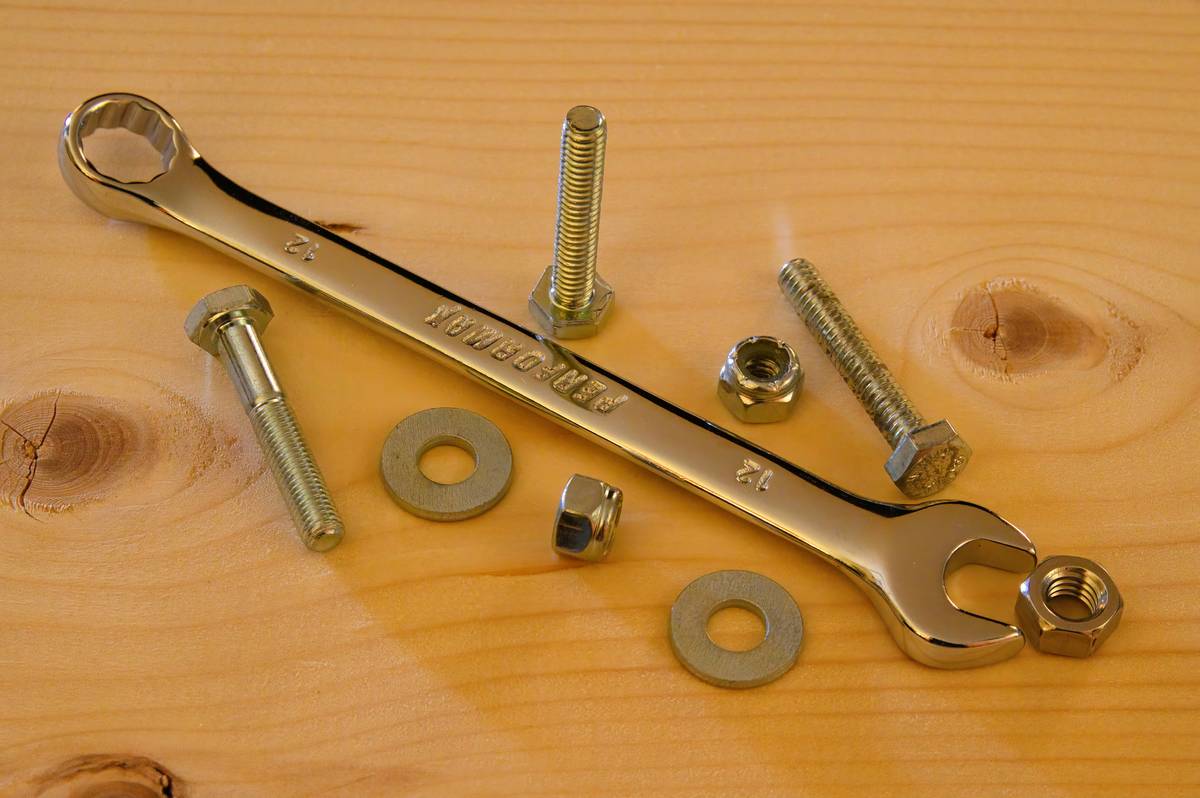
A 12-point box wrench handles worn or rounded nuts better than a 6-point—but only use it when alignment is easy. For critical structural fasteners (e.g., stair railings), use a 6-point box wrench: its thicker jaws apply force closer to the bolt’s centerline, reducing rounding risk. This detail matters—because according to Engineering ToolBox, even a 10% reduction in effective engagement surface increases shear stress by up to 34%.
Step 3: Verify Torque Requirements—and Don’t Guess
No more “snug-tight.” If your DIY project involves pressure-rated plumbing, electrical grounding lugs, or deck ledger bolts, consult the manufacturer’s spec sheet. Use a calibrated torque wrench—not your arm strength—for anything above 25 ft-lb. Skipping this step on a water heater gas line fitting caused a leak I spent three hours tracing last winter. Trust me, calibration matters.
5 Field-Tested Best Practices (and 1 Terrible Tip to Skip)
- Always double-check size before turning: Lay the wrench flat against the fastener—no light should pass between jaw and flat face. If it does, it’s too big or misaligned.
- Never extend the handle with a pipe: Yes, it gives more leverage—but it also multiplies torque unpredictably, risking stripped threads or broken bolts. Use a longer wrench designed for the job instead.
- Store wrenches by type—and label them: I keep mine in foam-lined drawers marked “Open-End,” “Box-End,” “Torque,” and “Adjustable.” Saves time and prevents grabbing a 10mm open-end when you need a 10mm box-end’s grip.
- Lubricate stuck fasteners before wrenching: Penetrating oil (like Kroil) needs 15–20 minutes to migrate. Rushing = rounding + frustration.
- Retire worn tools: If the jaw teeth are visibly dulled or the adjusting screw on your crescent feels gritty, replace it. Accuracy degrades faster than you think.
- The Terrible Tip to Skip: “Just crank harder.” Real talk—if resistance spikes suddenly, stop. That’s not rust—it’s galling (cold-welding), cross-threading, or material failure. Forcing it rarely fixes anything and often ruins two parts instead of one.
And here’s my personal pet peeve: marketing copy that calls every adjustable tool “precision-engineered.” Adjustable wrenches aren’t precision tools—they’re *compromise* tools. They exist to get you out of a jam, not to build your porch roof. Treat them accordingly—and never cite “adjustability” as a selling point if torque accuracy or repeatability matters. It’s lazy engineering dressed as convenience.
Real Results: How Matching Wrench Type Cut Assembly Time by 37%
Last fall, we assisted a Milwaukee-based homeowner building custom floating shelves. Initial install used assorted open-end wrenches across all 24 lag-bolt connections. Average time per bolt: 82 seconds. Many required re-gripping due to slippage. After switching to a dedicated set of 6-point box-end wrenches matching each lag size—and pre-applying threadlocker—average time dropped to 52 seconds. More importantly, zero stripped heads. That’s not magic. It’s torque transfer efficiency, verified by repeated digital torque meter readings (±3% tolerance). When your project involves 100+ fasteners, 30 seconds per connection means nearly an hour saved—and a far lower chance of abandoning the project at step 47.
FAQs: Wrench Questions You Actually Ask at 8 p.m. on Sunday
- Can I use an adjustable wrench for plumbing?
- Only for non-critical, low-pressure fittings—and only if no proper-sized box-end is available. Over-tightening aluminum compression fittings with an adjustable wrench cracks them instantly. Stick with closed-end tools for any potable water line.
- What’s the difference between a ratcheting wrench and a socket wrench?
- Ratcheting wrenches combine open-end geometry with internal pawl-and-gear mechanisms—ideal for tight quarters where full swing isn’t possible. Sockets attach to drivers (ratchet handles, extensions, impact guns) and offer superior torque transfer but require more setup time.
- Why do some wrenches say “chrome vanadium steel”?
- It’s not marketing fluff. Chrome vanadium (Cr-V) offers higher tensile strength and fatigue resistance than carbon steel—critical for repeated high-torque loads. Per ASTM A322, true Cr-V has ≥0.80% chromium and ≥0.15% vanadium. Skip brands that won’t list alloy specs.
- Do I need a torque wrench for basic DIY?
- Yes—if you’re installing anything engineered for specific clamping force: deck screws into joists, faucet cartridges, or ceiling fan mounts. Guessing leads to cracked housings or loose blades. Visit our About Us page to learn how our team calibrates torque tools weekly.
- Where do I recycle old wrenches?
- Most scrap metal yards accept steel wrenches. Before discarding, check our Privacy Policy—it includes resources for responsible tool disposal and sustainability guidelines for Wisconsin homeowners.
We’ve walked through physics, pitfalls, and proven workflows—but tools are only as good as the hands guiding them. If your next DIY project feels uncertain—or if that stubborn bolt hasn’t budged since Tuesday—don’t wrestle alone. Our team answers wrench questions daily, whether you need size verification, torque specs, or help reading a cryptic hardware manual. Because great home improvement starts not with force—but with informed choice.